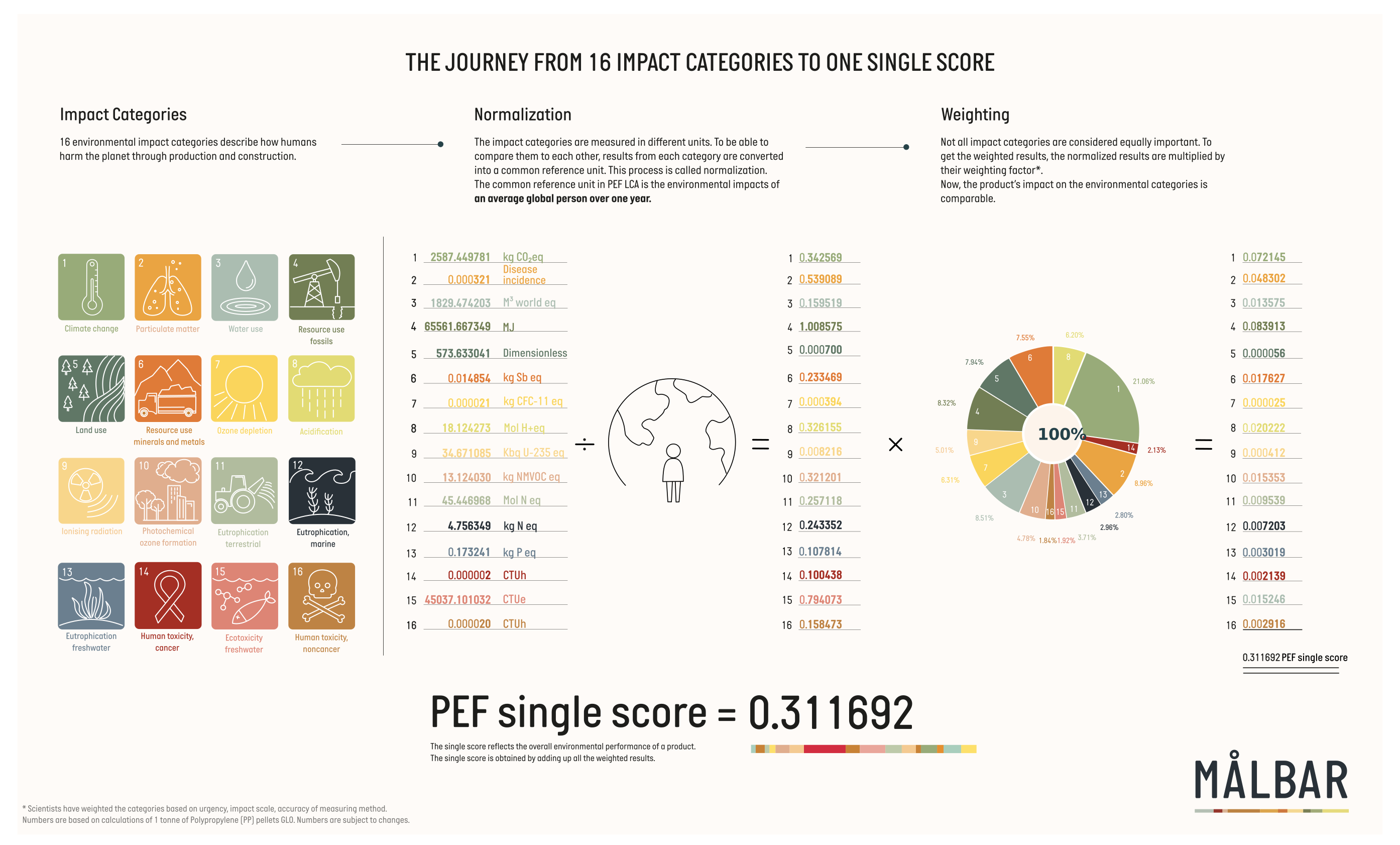
Single Score
Imagine you are baking a cake. The recipe contains ingredients, that are measured in different units, such as kilograms, litres, tablespoons, and pieces.
You are on a budget and want to know which ingredients constitute the largest share of the price for the whole cake.
To figure this out, you normalise the units (kilograms, litres, tablespoons, etc.) by converting them into the same reference unit, namely price. If you used two eggs for the cake and you paid 5 euros for 10 eggs, then the eggs in the cake cost (5/10*2) 1 euro. Maybe you also paid 5 euros for a bag of vanilla sugar with 100 grams but only used 5 grams for the cake – that’s only 0,25 euros.
You continue this method with all the ingredients. Let’s say you find out that the cake has a total price of 10 euros. Then the eggs make up 10% of the total costs, while the vanilla sugar constitutes 2,5%. This enables you to compare the different ingredients and see which is the most expensive ingredient in your cake.