Our Calculation Principles
Understanding environmental impact calculations can be complex
– but we’re here to make it easier.
LCA based on EU PEF
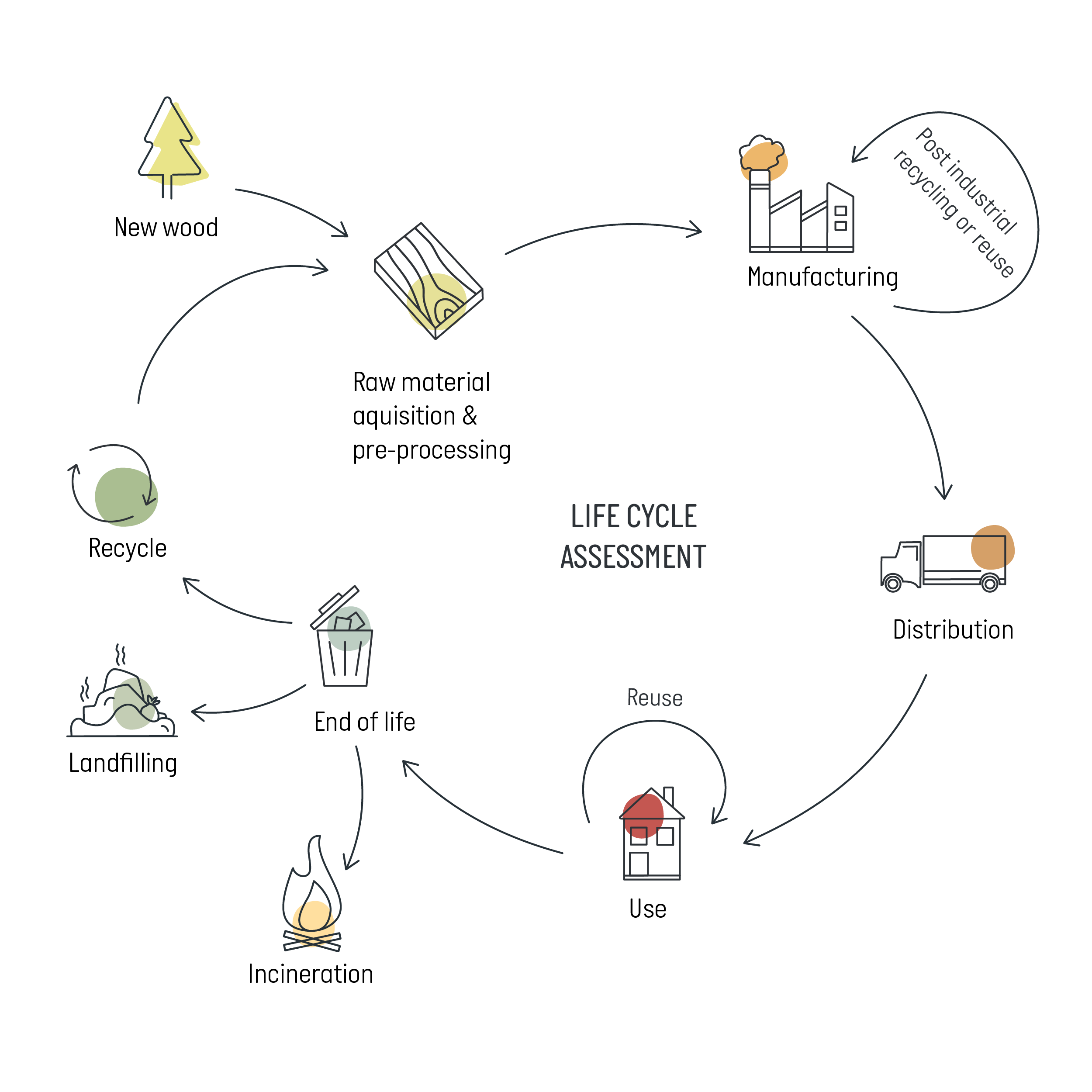
At Målbar, climate footprints are calculated using a structured Life Cycle Assessment (LCA) methodology based on the European Commission’s Product Environmental Footprint (PEF) framework.
Our modelling approach combines:
- Recognised LCA databases like EF3.1 and Ecoinvent
- Defined system boundaries
- Material and manufacturing-specific modelling logic
- Transparent and documented assumptions
Following PEF rules enables us to set up fixed calculation rules for all kinds of industrial products. This is a great advantage when using an LCA tool as the calculations are harmonised and done in the same way and not prone to manual calculation errors.
All products which are industrially produced can be modelled across the full life cycle. No life cycle stage is excluded without methodological justification.
This ensures comparability, reproducibility and alignment with European environmental footprint standards.
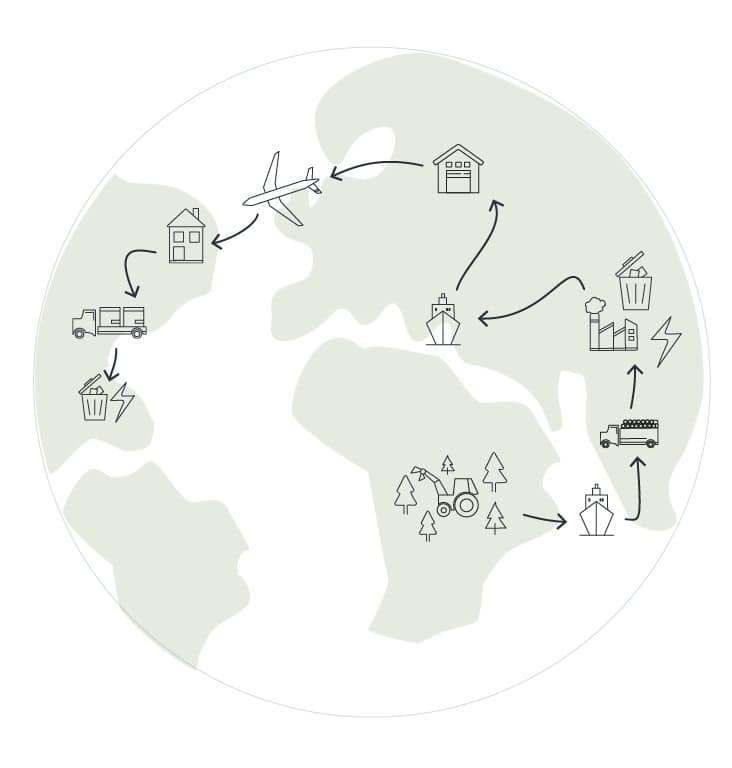
Click on the globe to see how a global value chain comes together.
Start with the tractor, for example, to read about Målbar’s handling of ‘Raw material production’ in Målbar LCA.
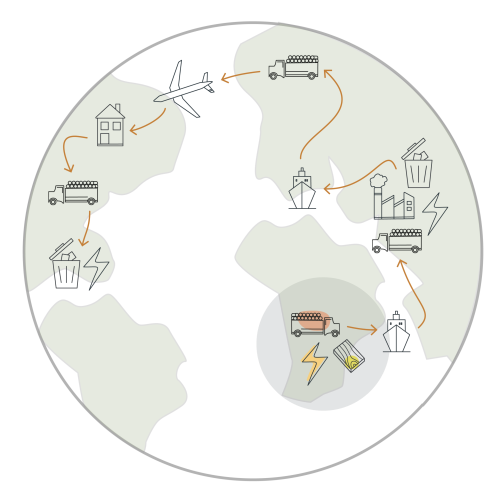
Material-based LCA modelling
Raw material production

Raw material impacts are derived from following databases:
- Ecoinvent 3.11
- EU Environmental Footprint (EF) datasets
System boundaries and modelling logic follow the European Commission’s
Product Environmental Footprint (PEF) Method – Annexes 1–2 (2021).
The raw materials stage includes all of the activities that transform a raw material into a pre-processed material, ready to be used by a tier 1 supplier to manufacture a final component. The impact of the transport between these different activities is also included in the raw material stage.
To illustrate the modelling depth, we use solid wood and textiles as examples, as they represent some of the most complex product systems to model amongst industrial materials.




Product manufacturing

Product manufacturing modelling typically consists of the last processes before obtaining the finished product. A few common examples of these processes can be as a minimum, assembly process. These commonly take in one same location, usually the tier 1 supplier or the location of the own brand or producer.
Transport & distribution

Stocking and distribution modelling
Transport and distribution typically consist of a combination of storage and multiple transport stages across the supply chain.
This includes:
- Distribution to warehouses and customers
- Storage in distribution centres
Transport is modelled based on distance, weight and, where relevant, volume of goods. Storage impacts are based on the volume of products and duration of storage.
Different transport modes such as road, sea, rail and air are included depending on available data.
Stocking and distribution emissions are modelled based on documented transport datasets and EU Product Environmental Footprint (PEF) guidance.
Use phase

Modelling energy use during a product’s lifetime
The use phase is modelled based on documented assumptions regarding product lifetime,standby and operational electricity consumption.
All assumptions follow recognised European methodology and published reference studies.
End-of-life

Modelling recycling, incineration and landfilling
The end-of-life stage is modelled using statistical waste treatment data, material-specific recycling rates and the Circular Footprint Formula (CFF) in accordance with EU Product Environmental Footprint (PEF) guidance.
This ensures consistent allocation of recycling benefits and realistic treatment assumptions.