
Rosendahl Design Group
Rosendahl Design Group produces across eight design brands, spanning porcelain, glass, textiles, steel and plastic. When customers began asking for documented climate calculations on specific products, the company decided to make life cycle assessment a fixed step in product development.
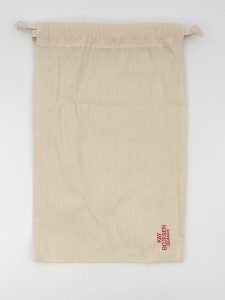
The cotton bag that changed how Rosendahl Design Group sees its own products
At Rosendahl Design Group, a product developer responsible for the Kay Bojesen range was running a life cycle assessment (LCA) on an accessory nobody had given much thought to. The result surprised the entire development team and became the starting point for Målbar LCA now being a fixed requirement before a product is cleared for production in the company’s development process.
Eight iconic brands, one common language for product carbon footprints
Rosendahl Design Group is home to eight iconic design brands, with products spanning porcelain, glass, textiles, steel and plastic. Maja Louise Christensen is a product developer in the company’s product development team, where she is responsible for Kay Bojesen as well as a number of products in electronics, plastic and steel. She also holds the main responsibility for rolling out Målbar internally to the 7 other product developers on the team, from onboarding to day-to-day support whenever questions about LCA calculations come up.

When customers started asking for documented climate data
It didn’t begin as an internal project, but as a response to outside demand. Major customers started requesting documented climate calculations on specific products, and Rosendahl Design Group decided to go all-in on the first 50 products.
Once the team had worked through them, a natural next question emerged: why not make this a permanent part of the system? Today, a Målbar LCA calculation is one of the checkpoints that must be ticked off before a product can be approved for production within the company’s 18-month development process.
When a cotton bag turned out to be half the carbon footprint
It was in the detailed LCA calculations that the biggest eye-openers appeared.
One of the clearest examples was a cotton bag that had, for years, accompanied a range of painted products as protective packaging, without anyone ever questioning it.
That cotton bag, which was really just an accessory to the product, accounted for over half of the CO2eq emissions. It was a huge insight, and everyone was sort of: We didn’t see that coming.
-Maja Louise Christensen, Product Developer, Rosendahl Design Group
The insight created an internal discussion about alternatives, and the team ended up switching to a bag in a different quality.
The same pattern showed up elsewhere in the range: a revised packaging solution for a Christmas ornament series made it possible to fit up to 50 percent more products on a pallet, while also giving the sales team a story they could use. The LCA data also revealed that it isn’t always clear-cut that a “recycled” option is the better choice. Switching from metal to plastic, and from virgin to recycled glass, didn’t deliver the carbon savings the team had expected. That pushed the team to question their own assumptions about material choices, rather than simply following a general idea that recycled automatically means better.
For Rosendahl Design Group, this hasn’t meant stepping back from climate reflected material choices; quite the opposite. It has sharpened the conversation. A Målbar LCA calculation is now a fixed part of evaluating every material decision, giving the team a documented basis for understanding where the real impact lies across the full range of parameters, from production and transport to end of life.
From spreadsheet-based screening to a shared LCA platform
With over 1,000 products in the catalogue, Rosendahl has been on the journey with Målbar from the early days of spreadsheet-based LCA screening. As Målbar moved from an Excel-based tool to a web platform, so did the way the team works.
Today, Målbar LCA brings the calculations together in one place, giving the eight product developers a shared reference point that other departments can also draw on for sustainability documentation.
“We’ve taken the whole product apart, so now we actually know what it’s made of. That’s where we can look things up when marketing or sales ask why we made a particular choice.” – Maja Louise Christensen, Product Developer, Rosendahl Design Group
The data is also now used actively in conversations with suppliers, among other things to compare the climate footprint of production in different countries and to make more specific documentation requests. In one case, gaps in a supplier’s documentation about a lamp’s contents led Rosendahl Design Group to move production elsewhere. At the same time, the sales and marketing teams find they can respond to customer enquiries about product carbon footprints much faster, without the weeks-long wait it used to take.
Next step: LCA data for the entire back catalogue
Rosendahl is currently working to calculate its entire historical product catalogue, covering several hundred LCA screenings that need to be structured and aligned. The goal is to have a complete dataset ready, so the company can stand on solid ground whatever requirements come next, whether from customers, regulation or the market.
“You can’t stand alone as a company on this. But if you wait until someone asks, you’re already behind, and that’s why it makes sense to act in good time.” – Maja Louise Christensen, Product Developer, Rosendahl Design Group
For other companies with complex, materials-heavy product catalogues, Rosendahl Design Group’s experience shows that the most important precondition for solid LCA documentation isn’t perfect data from day one, but a shared, structured starting point to build on.

If your customers are starting to ask the same question, let’s talk.