
Clickit
Clickit supplies power solutions for workplaces in Norway and Sweden. When a project required documentation of CO2-eq, the company decided to get ahead of the requirements it expects will follow.
The requirements are coming. We would rather have it under control in good time.
A project required documentation of CO2-eq, and Martin Brage is convinced it will not be the last. So Clickit began carrying out LCAs on its products before the requirements reach the whole industry. Along the way, the company also gained insight into suppliers, transport and components.
“We knew there were differences between components, but not that the differences were so large.”
– Martin Brage, Managing Director and Founder, Clickit
Small enough to act early
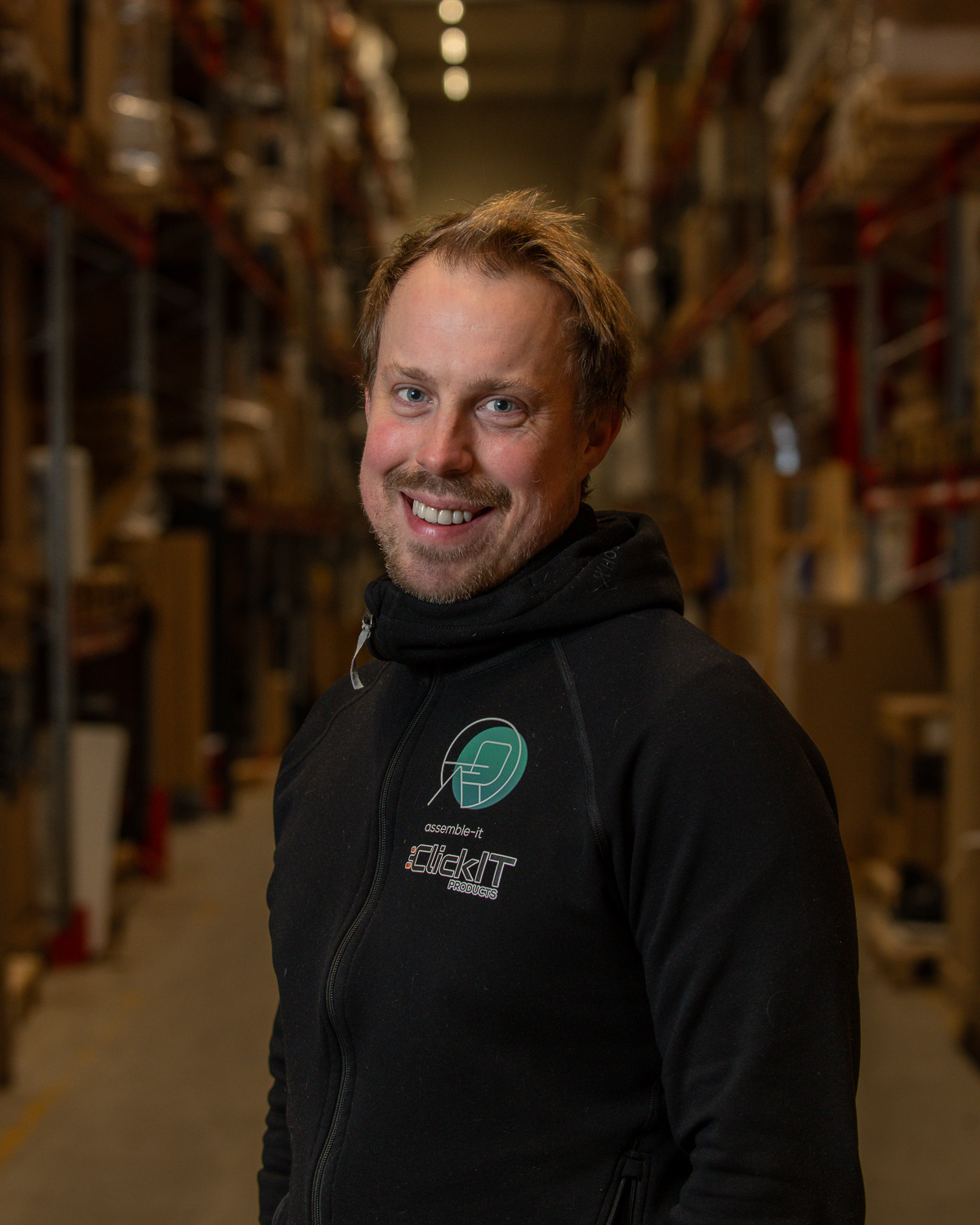
Clickit supplies power solutions for workplaces and sells in both Norway and Sweden today. Martin Brage is the founder and managing director.
The company is small, so Martin covers everything from sales and purchasing to product development. Clickit competes with large players, but Martin sees advantages in its size. “We think a little outside the box, and the route to a decision is short,” he says. That leaves room to act before the requirements are in place.
When the requirements became concrete
It began with a project that required the CO2-eq of the products to be documented. Martin has no doubt that requirements of this kind will also apply in Clickit’s industry. “We know more and more requirements are coming, so we want to be a little ahead,” he says.
Documentation is also an advantage at the tender stage, even when it is not a requirement. It lets Clickit show that it has control of what its products emit. Martin is open about the fact that it costs money:

The best sellers first
Clickit started with the products that sell best. So far, Clickit have conducted LCAs on most of their power products. The aim is to build documentation for more and more items. It is a deliberate priority: better over time than in a rush once the requirements arrive.
Transport is a concrete example of what you gain by starting early. A customer wanted an urgent delivery from Clickit. When something needs to arrive quickly, air freight is often the answer, and the LCA showed that the difference between air freight and other modes of transport was far greater than expected. Urgent deliveries also added to the cost.
“We learnt that the difference between air freight and other modes of transport was much greater than I thought.”
– Martin Brage, Managing Director and Founder, Clickit
What starting early gave them
Clickit has documentation ready for its first products before the requirements really reach the power industry. Martin believes Norway and Sweden are somewhat behind Denmark, but that a lot has happened over the past year. He feels the documentation has already helped win a few projects. He is realistic, though: price still carries a lot of weight in many tenders. But when competitors face the same requirements, being able to show documentation becomes an advantage.
Working with LCAs has also delivered something that was not planned. “Internally, our eyes have been opened to what is actually going on,” says Martin.
The next step for Clickit is to get more products onto the platform, so that the documentation is ready when the requirements arrive.
Sooner or later, a customer will ask for the documentation. Then there are two kinds of suppliers: those who have the answer ready and those who still have to get started. Clickit has chosen to be the first kind.
“You get better control of what you buy, and a much better dialogue with your suppliers. The requirements are coming, so you are better off starting now than in a rush at the last minute.” Martin concludes.
Suppliers became part of the answer
For Clickit to document its products, it needs data from its manufacturers. That has changed the dialogue. When Clickit carries out LCAs, contact becomes closer, and suppliers can see that Clickit is investing in their products. Martin points to a difference that speaks for itself. One supplier delivers a bill of materials for a product in four hours. Another takes three weeks. “That tells you something about how well they know their own products,” he says.
The LCAs have given Clickit a concrete basis for assessing suppliers. Martin’s experience is also that the differences between factories can be large, and that it depends more on the individual factory than on which part of the world the product comes from. That conversation is easier to have calmly, before a requirement makes it urgent.
If your customers are starting to ask the same question, let’s talk.